
COP17 Exhibition

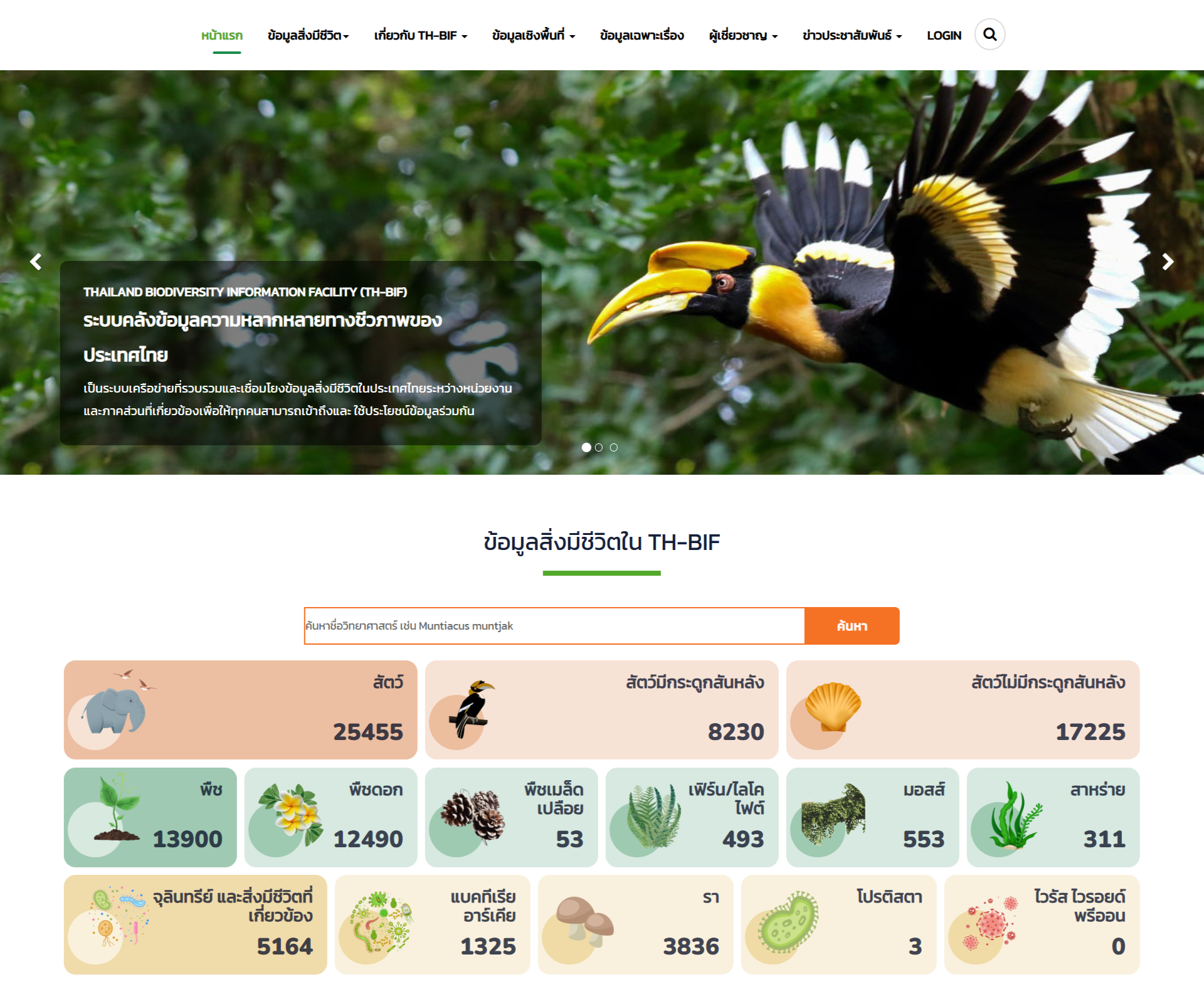
TH-BIF (Thailand Biodiversity Information Facility) & Citizen Science Launch:
Overview: Established as a central national network connecting biodiversity data from government agencies, the private sector, and academic institutions to support policy-making, conservation planning, and sustainable use.
Key Features: Species taxonomy tracking (Animals, Plants, Microbes, Algae) and Alien Species databases.
TH-BIF Citizen Science Application: Launched the initial framework and mobile application to engage citizens, researchers, and field staff in tracking and collecting biodiversity data seamlessly.

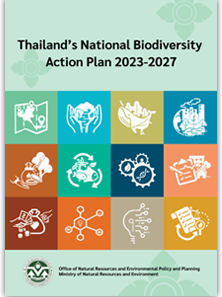
5th NBSAP (2023–2027): Established the National Biodiversity Strategy and Action Plan aligned with the Kunming-Montreal Global Biodiversity Framework (KM-GBF).
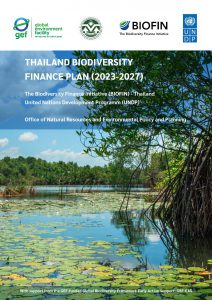
Biodiversity Finance Plan (2023–2027): Developed financial strategies to support sustainable biodiversity management.

Biodiversity Monitoring Platform: Deployed advanced digital systems for tracking ecosystem changes.
Biodiversity Expenditure Review: Evaluated national investments and budget allocations for environmental conservation.

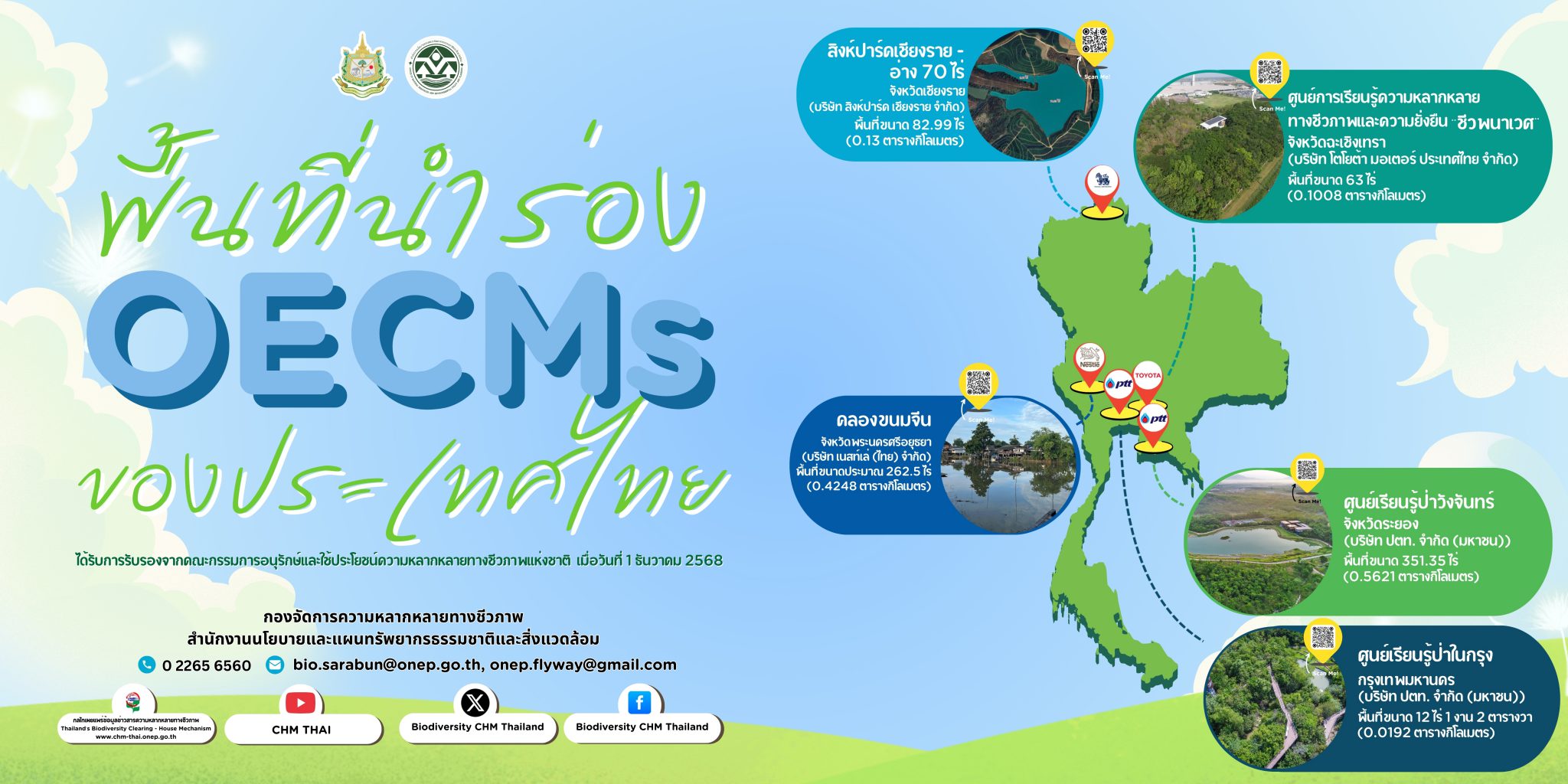
First 5 Certified OECM Sites: Recognized pioneering Other Effective Area-based Conservation Measures (4 private sector sites and 1 co-managed site):
- Chiwaphanawet Learning Center (Charoen Pokphand / Toyota)
- Pao Wang Chan Learning Center (PTT)
- Pai In Krung Learning Center (PTT)
- Khlong Khanom Chin (Nestlé Thailand)
- Singha Park Chiang Rai – Ang 70 Rai
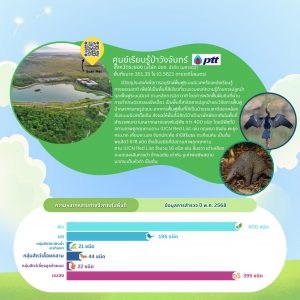
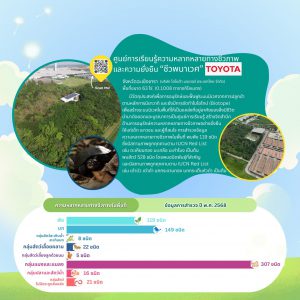
178 Iconic Species of Thailand: Highlighted key flagship species of the country.
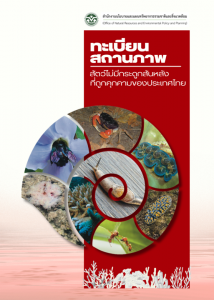
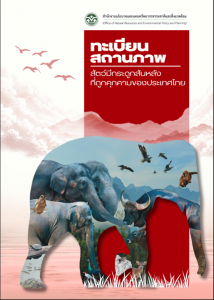
Thailand Red Data 2025: Assessment of Threatened Species Thailand has systematically assessed and updated the conservation status of threatened species in the country, serving as a vital national tool for guiding conservation, restoration, and mitigation of threats to biodiversity.
Key Assessment Statistics:
-
- Vertebrates: Assessed a total of 4,928 species (covering mammals, birds, reptiles, amphibians, and fish).
- Invertebrates: Assessed a total of 5,896 species (covering molluscs, crustaceans, corals, and Hymenoptera insects such as bees, wasps, and ants).
National Milestones & Updates:
-
- Thailand initially established the conservation status for key invertebrate groups (Molluscs, Crustaceans, and Corals) in 2020.
- In 2025: Thailand updated the status of these invertebrate groups and newly assessed the conservation status of Hymenoptera insects, developed through rigorous scientific data collection and comprehensive stakeholder consultations involving national experts and academic institutions.

7th National Report: Successfully submitted Thailand’s 7th National Report to the CBD Secretariat (ranking 23rd globally). Explore More
Expanded OECMs: Added at least 7 new certified sites (5 Recreational Forests and 2 University sites).
Country Programme for Biodiversity: Defined national priorities for international support.
Sustainability-Linked Bond (SLB): Mobilized innovative finance supporting the global 30×30 Target.
TH-BIF Growth: Expanded to 33 Partner Institutions with over 150,000 biodiversity records.
Draft Biodiversity Act: Endorsed for Cabinet submission to establish a unified legal framework. Explore More

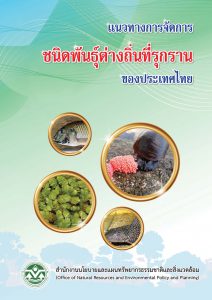
National Invasive Alien Species List & Management Measures 2026: Assessed 472 species alongside updated management guidelines. Explore More